
AI, and What it Means in Web Search
Let’s run through it in easy-to-digest bullet points.
AI = ‘Artificial Intelligence’. When machines learn how to provide information based on existing information, whether it’s fed to them as a human prompt or it already exists online for referencing.
AI in web search kicks in when —
A user types a search term into the likes of ChatGPT or Google (Gemini*), etc and
The platforms generate their own answers based on what they see on existing websites.
Whether it’s text, images, music or other digital content, this is what’s referred to as ‘generative AI’.
Not a traditional search experience — historically, we’d search for something, and Google and other search engines would rank web pages based on relevance, and users would likely click the highest-ranking link and visit the website.
But AI —
Discourages clicks to websites, because the answer to a user’s query is already right there in the search results.
AI is more likely to generate its own answer to ‘informational’ intent queries/keywords. Eg, ‘What is’, ‘How do I’, ‘Where is’-type questions.
At the time of this writing, Google will likely not serve up an AI-generated result for more ‘transactional’ intent queries, like ‘Nike shoes Dandenong’ etc.
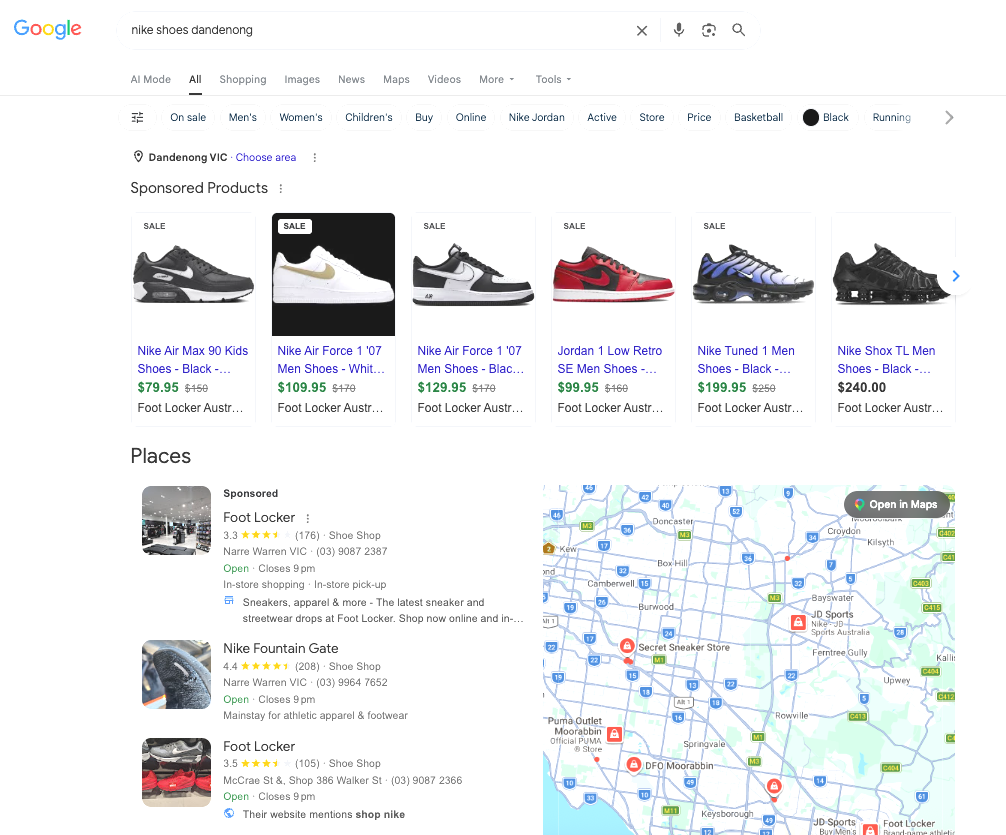
Notice the Google search results for the transactional search for ‘Nike shoes Dandenong’ here.
No AI-generated results from Gemini, just sponsored and Shopping results, and the map pack.
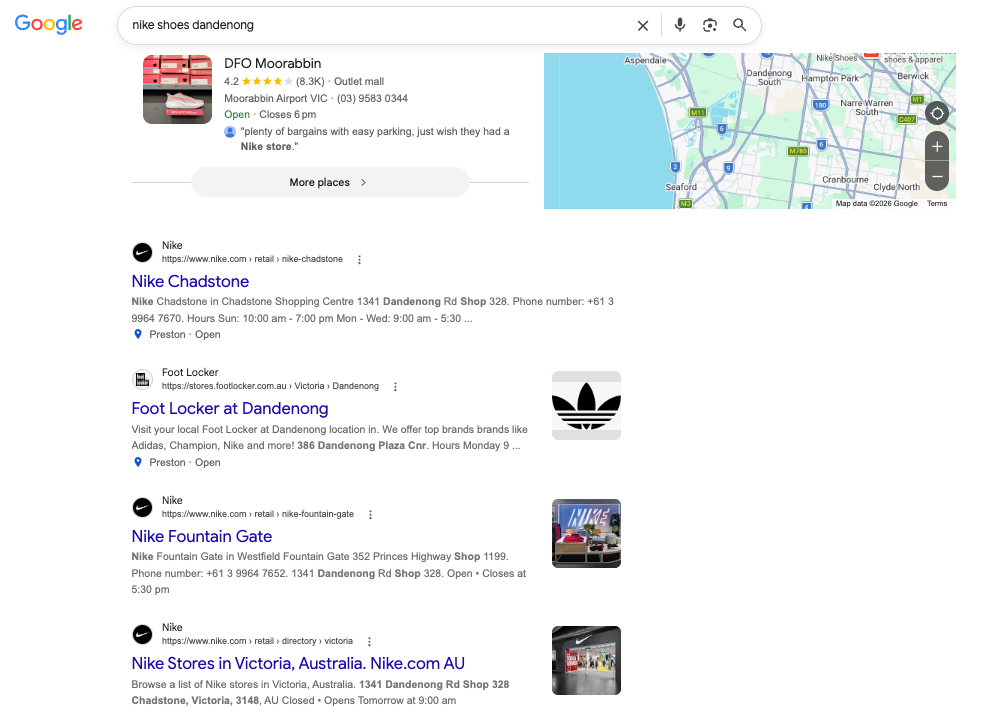
And then the first organically-ranking pages below that. We’re all used to this experience!
*The (Experience) Difference Between Google (Gemini) and ChatGPT
ChatGPT — users need to deliberately go to ChatGPT’s website or app to use it.
Gemini — for Gemini (owned by Google), users can deliberately go to the Gemini app at gemini.google.com/app, but most users just use Google, and the Gemini engine will kick in and provide AI-generated results natively within the Google results page.
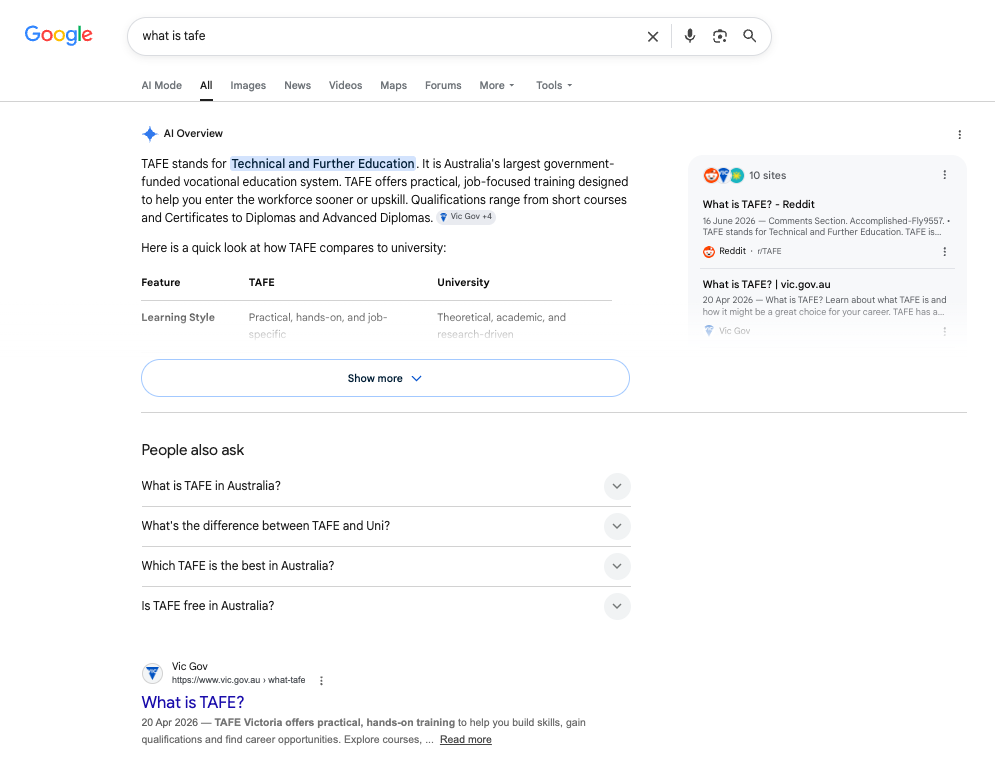
Here’s how a ‘What is’ type question comes up in AI-generated search results, in this case, Google Gemini, for ‘what is TAFE?’
Where it says ‘AI Overview’: that’s Gemini doing the work to provide its own answer within the Google search result.
Below the overview (Victorian Government website etc), are the more traditionally-ranking web page links (not AI). In digital marketing, this is where we often talk about SEO, or Search Engine Optimisation, the practice of trying to get webpages to rank ‘organically’ in search results. But that’s for another Thought Feed post.
The ChatGPT Search Experience
In ChatGPT, here’s an example of a very informational search intent query, ‘How many countries take part in the FIFA World Cup in 2026?’
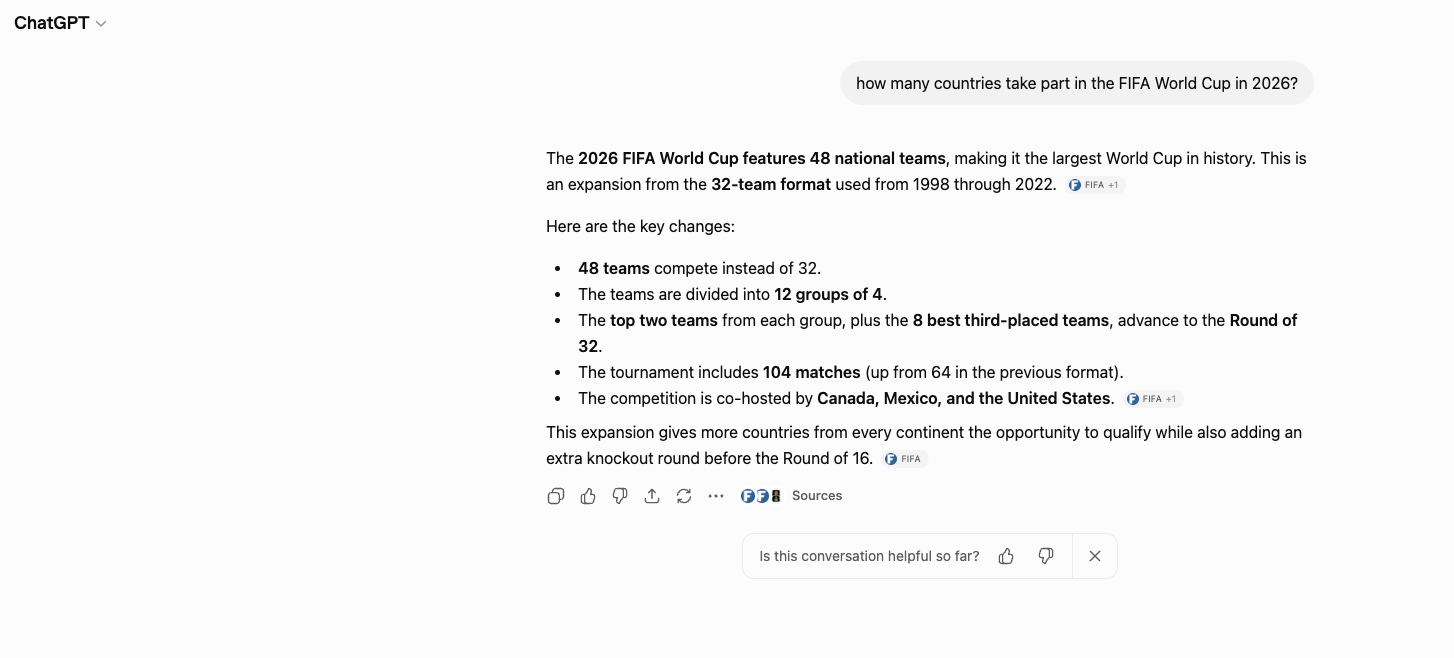
Here, ChatGPT has crawled several websites for the information, and rewritten the answer in its own words: ‘The 2026 FIFA World Cup features 48 national teams…’ There are reference links as to where the info is from, but they’re not prominent (at the bottom, and TINY).
And here’s how ChatGPT responds to a more transactional or commercial intent query, ‘plumber Melbourne northern suburbs’. This would be considered a more ‘classic’ type of Google search:
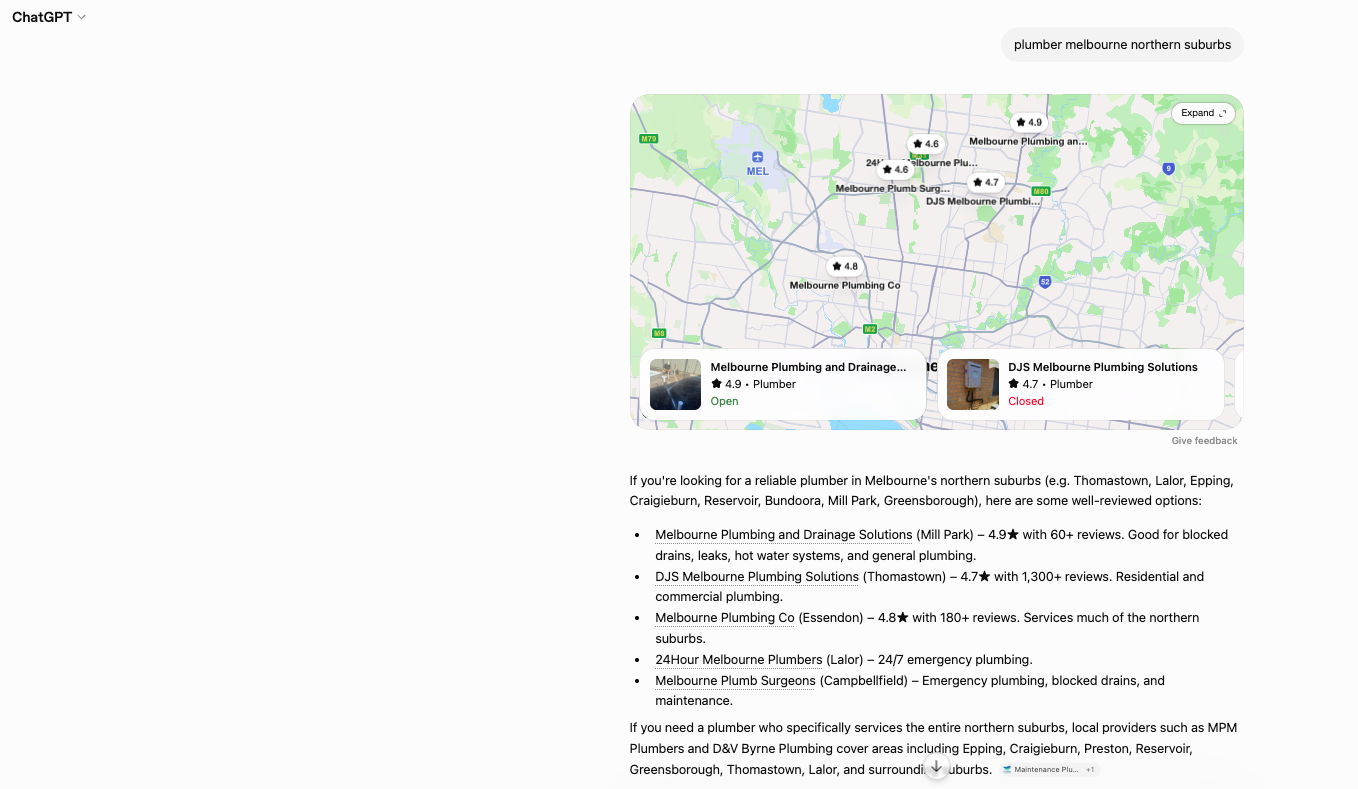
You can see here, similar features to a Google search result—a map excerpt, some links to businesses etc—but it’s not as ‘rich’ as what Google serves up.
We Are Chatting…Not So much ‘Searching’
While there’s a lot of talk in SEO and business circles about ChatGPT replacing Google as a search engine, you can see that right now, for the actual user, it’s not quite as trustworthy. But more importantly, it really serves a different purpose.
And the clue is right there in the name: with ChatGPT and similar generative AI platforms, the experience is more of a ‘chat’ with it than a feeling of searching an index.
Many people will use ChatGPT, Gemini, or more business-focused platforms like Copilot or Claude, for more complex things like helping with complicated calculations, combining data from several websites for market research (a ‘multi-tab’ or what I like to call a ‘spicy Google search’), or helping create business plans.
With this, the interaction with the platform becomes more conversational, like you’re brainstorming with a friend or coworker. Again, that’s another story for another Thought Feed explainer!
And that is how users are already interacting with AI in their day-to-day search habits, even if some don’t even know it!
